What Should You Do After A Head Injury In A Car Accident?
By: Drazin & Warshaw

A car crash can turn one normal afternoon into a before-and-after moment. One second, your family is driving through Monmouth County. The next, everyone is shaken, the car is damaged, police are asking questions, and you say you feel fine because you can stand up and talk.
Then the headache starts.
Maybe it comes that night. Maybe it comes the next morning. Maybe you feel foggy, forgetful, dizzy, emotional, tired, or not quite yourself. That is when the question behind the panic sets in: do you need a traumatic brain injury lawyer in New Jersey, or do you just wait and see?
Here is the honest answer. After a head injury in a car accident, you should treat the symptoms seriously, document everything, and avoid letting the insurance company decide what the injury is worth before doctors understand what happened. A traumatic brain injury, also called a TBI, can disrupt normal brain function after a bump, blow, jolt, or penetrating injury to the head.
New Jersey also gives injured people a limited time to act. Under N.J.S.A. 2A:14-2, most personal injury lawsuits must be filed within two years after the injury claim accrues, although some cases may involve different rules.
If your family is worried about a head injury after a crash in New Jersey, Drazin & Warshaw can review what happened, explain how a car accident injury claim works, and help you protect your next steps before evidence disappears or the insurance company pushes for a quick answer. Call 732-333-8141 today or submit the online contact form to schedule a free consultation.
Head Injury In A Car Accident: The First 24 Hours After A Crash
Think of the first day like the foundation of the whole case. You do not need to do everything perfectly. However, the steps you take early can protect your health and your claim.
What Should You Do First?
A head injury in a car accident should always get medical attention, even if you walked away from the scene. Brain injuries do not always look dramatic right away. You may talk normally, answer questions, refuse an ambulance, and still develop symptoms later.
Start with these steps:
- Get medical care. Go to the ER, urgent care, primary doctor, or a specialist if symptoms appear. Tell the provider that your symptoms began after the crash.
- Track how you feel. You or someone close to you may notice confusion, mood changes, memory gaps, or unusual sleep before you recognize the problem yourself.
- Save crash evidence. Keep photos, police information, insurance details, witness names, repair estimates, and medical paperwork.
- Avoid quick statements. Do not tell the insurance company your injury is minor before doctors know the full picture.
- Write down symptoms. Keep a simple daily note with headaches, dizziness, nausea, sleep issues, brain fog, light sensitivity, memory problems, mood changes, or missed work.
This does not mean every headache is a life-changing injury. It means you should not guess. Let medical professionals evaluate your symptoms, and let the records show the timeline.
Brain Injury Symptoms: The Symptom Checklist Families Actually Need
A brain injury does not always announce itself with one obvious sign. Sometimes it shows up in small changes that families notice at home, in the car, at work, or during conversations.
What Changes Should Families Watch For?
Brain injury symptoms can affect the body, thinking, sleep, mood, and daily routines. After a crash, watch for symptoms that appear right away or develop over the next several days.
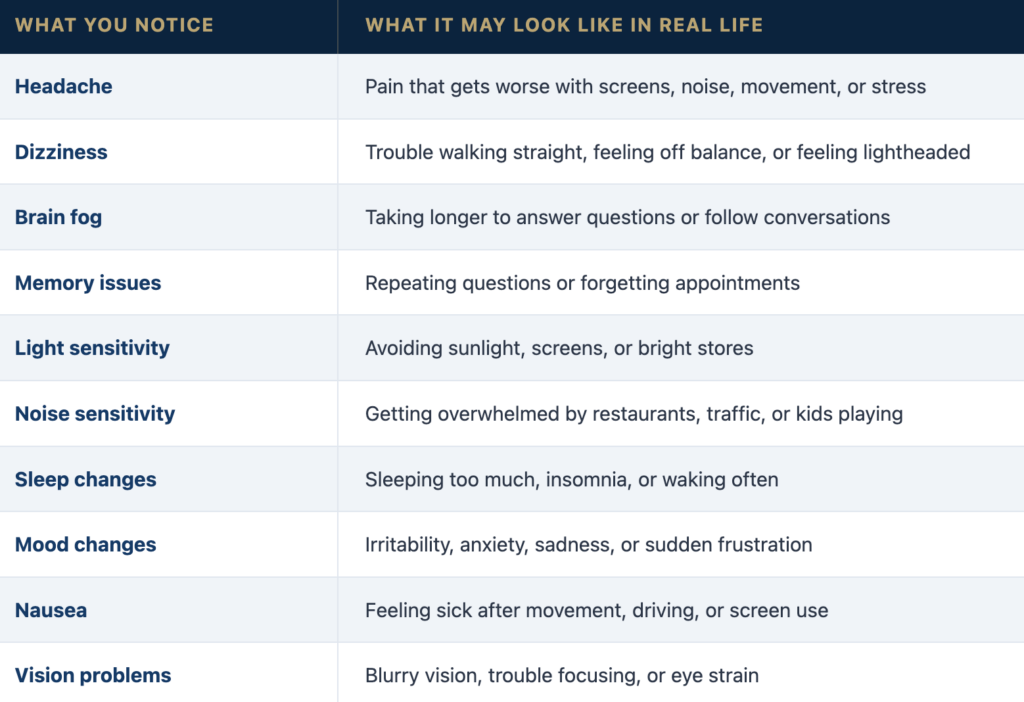
Families should take emergency symptoms seriously. Severe headache, repeated vomiting, seizure, slurred speech, weakness, worsening confusion, loss of consciousness, or unusual behavior may require urgent care.
Delayed Concussion Symptoms: Can Problems Show Up Later?
You may feel wired immediately after an accident because adrenaline takes over. Later, once your body settles, symptoms become harder to ignore. You may not know you are hurt right away. You are focused on passengers, tow trucks, police, work, kids, transportation, and getting home.
That is why medical documentation matters so much. If symptoms start later, say that clearly to the doctor. For example: I was rear-ended yesterday. I felt shaken at the scene, but last night I developed a headache and dizziness. Today I feel foggy and nauseous.
That kind of detail can help connect the symptoms to the crash.
Similar Post: Top 8 Mistakes to Avoid After a New Jersey Auto Accident
Insurance Company Brain Injury Claim: Why Do Insurers Push Back On TBI Claims In New Jersey?
Insurance companies know head injuries can be expensive. They also know they are often invisible. So, they may look for reasons to minimize the claim.
Traumatic Brain Injury Claim: Why Do Insurers Dispute These Cases?
A traumatic brain injury claim may face pushback because the injury does not always show on the outside. A person can look normal and still struggle to work, drive, read, parent, sleep, or hold a conversation.
Common insurance arguments include:
- The crash was too minor.
- The person walked away.
- There was no loss of consciousness.
- The person waited too long to see a doctor.
- The CT scan or MRI was normal.
- The symptoms came from stress.
- The person had migraines, anxiety, ADHD, depression, or a prior concussion.
- The medical bills are too high.
- The person should have recovered faster.
Some of those arguments sound convincing until you look closer. A mild traumatic brain injury can still disrupt daily life. A normal scan does not always mean the person has no symptoms. A prior condition does not give an insurance company permission to ignore a crash-related aggravation.
That is why a strong claim needs medical records, witness observations, work records, symptom journals, and a clear explanation of what changed after the collision.
Similar Post: What to Do If You’re Injured by an Uninsured Driver in New Jersey
Car Accident Injury Claim: What Evidence Makes A Difference?
A car accident injury claim involving a brain injury should tell the full story, not just show a repair bill and a doctor note.
Helpful evidence may include:
- Crash Evidence: Police reports, scene photos, vehicle damage, traffic camera footage, dashcam footage, and witness statements.
- Medical Evidence: ER records, primary care notes, neurology records, concussion clinic records, physical therapy, vestibular therapy, vision therapy, prescriptions, imaging, and follow-up plans.
- Daily Life Evidence: Symptom journals, missed work records, school accommodations, family observations, texts about symptoms, and examples of tasks the person can no longer do easily.
- Financial Evidence: Medical bills, lost wages, mileage to appointments, reduced hours, missed overtime, and future care needs.
- Before-And-After Evidence: This is often powerful. Show what life looked like before the crash and what changed after. Could you work full days before but now need breaks? Could you drive at night before but now avoid headlights? Could you coach, read, exercise, cook, or manage family schedules before but now struggle?
The more clearly the evidence shows the change, the harder it becomes for an insurer to call the injury minor.
New Jersey Car Accident Claim: What Legal Pieces Should You Understand In New Jersey?
New Jersey car accident claims can involve several moving parts. This is where families often feel overwhelmed.
New Jersey Personal Injury Claim: What Laws And Insurance Rules Matter?
A New Jersey personal injury claim after a car crash may involve the statute of limitations, auto insurance coverage, Personal Injury Protection benefits, liability evidence, and damages.
As noted earlier, New Jersey generally gives injured people two years to file a personal injury lawsuit. However, waiting can still hurt the case because video can disappear, witnesses can forget, vehicles can get repaired, and medical gaps can give insurers room to argue.
New Jersey auto accident claims may also involve PIP, or Personal Injury Protection. PIP pays medical costs if you or other covered people are injured in an auto accident, and it is often called no-fault coverage because it pays regardless of who caused the crash.
PIP can help with medical treatment, but it does not always solve everything. There may be disputes over medical necessity, coverage limits, deductibles, co-pays, and whether additional claims can be made against the at-fault driver.
Serious Car Accident Injury: What Damages Can A TBI Claim Include?
A serious car accident injury claim may include compensation for both financial and personal losses. In a TBI case, damages may include:
- Emergency medical care
- Hospital bills
- Neurology visits
- Concussion clinic care
- Vestibular therapy
- Vision therapy
- Medication
- Future medical care
- Lost wages
- Reduced earning ability
- Pain and suffering
- Sleep disruption
- Emotional distress
- Loss of normal activities
- Help with household responsibilities
- Long-term limitations
The value of a claim depends on the facts. A mild concussion that resolves quickly differs from a traumatic brain injury that affects work, memory, driving, balance, mood, or independence for months or years.
TBI Claim Mistakes: What Should You Avoid Doing After A Head Injury In New Jersey?
Sometimes the best way to protect a claim is to avoid the common mistakes.
Post-Concussion Syndrome: What Mistakes Can Hurt Your Case?
Post-concussion syndrome refers to symptoms that continue after the initial injury period. These symptoms may include headaches, dizziness, fatigue, irritability, trouble concentrating, memory problems, sleep issues, or sensitivity to light and noise.
If symptoms continue, avoid these mistakes:
- Do not downplay symptoms. Tell doctors the truth, even if you feel embarrassed or tired of talking about it.
- Do not skip follow-ups. Gaps in treatment can make insurers argue that you healed or that the symptoms were not serious.
- Do not rush back too hard. If work, screens, driving, or exercise make symptoms worse, tell your doctor.
- Do not post recovery updates online. Insurance companies may misread photos, comments, or videos.
- Do not accept a fast settlement. Brain injury recovery can take time. A quick offer may not account for future care or lost earning ability.
- Do not assume a normal scan ends the issue. Keep following medical advice if symptoms continue.
New Jersey Brain Injury Lawyer: Why Is Drazin And WarshawThe Right Call?
A head injury case needs patience, detail, and a clear record. It also needs someone who understands how insurers challenge invisible injuries.
A traumatic brain injury lawyer in New Jersey can help your family organize the medical evidence, document daily limitations, identify insurance coverage, calculate damages, and push back when an insurer disputes the injury.
Drazin and Warshaw, P.C. is a New Jersey personal injury law firm that handles accident and injury cases, including motor vehicle accidents, medical malpractice, defective products, workplace accidents, premises liability, and wrongful death. The firm has served negligence victims for more than 70 years and has recovered more than $500 million for clients.
For families in Monmouth County, Ocean County, Middlesex County, and nearby New Jersey communities, a local legal team can help connect the medical facts, insurance issues, and crash evidence into one clear claim.
A legal review can help answer:
- Did the crash cause or worsen the head injury?
- What medical care should be documented?
- What PIP benefits apply?
- Can you bring a claim against the at-fault driver?
- Did the insurance company undervalue the injury?
- What evidence should be preserved now?
- Are future symptoms or work limits part of the claim?
- What deadlines apply?
FAQ: Head Injury Claims After New Jersey Car Accidents
When Should We Call a Traumatic Brain Injury Lawyer in New Jersey?
You should call a traumatic brain injury lawyer in New Jersey as soon as possible after a crash-related head injury, especially if symptoms continue, medical bills are growing, work is affected, or the insurance company disputes the claim.
Can You Have A TBI Without Losing Consciousness?
Yes. A head injury in a car accident can happen without loss of consciousness. A concussion or TBI can result from a bump, blow, or jolt that disrupts normal brain function.
What If The CT Scan Was Normal?
A traumatic brain injury claim may still exist even if a CT scan was normal. Some concussion symptoms do not appear on standard imaging, so medical records, symptoms, treatment, and functional changes still matter.
Can Concussion Symptoms Appear Days Later?
Yes. A concussion after a car crash can involve delayed symptoms, including headaches, dizziness, brain fog, nausea, light sensitivity, sleep changes, and trouble concentrating.
How Long Do We Have To File a Personal Injury Claim In New Jersey?
A car accident injury claim in New Jersey generally must be filed within two years, although some cases may have shorter notice rules or special deadlines.
Talk To Drazin And Warshaw, P.C. After A Head Injury In A Car Accident
A head injury can feel scary because the symptoms are not always obvious, the recovery is not always predictable, and the insurance company may not take it seriously at first. But your family does not have to guess through the next steps alone.
Drazin and Warshaw, P.C. helps injured people and families across New Jersey pursue compensation after serious car accidents, traumatic brain injuries, and other life-changing injuries. Whether the crash happened in Monmouth County, Ocean County, Middlesex County, or another New Jersey community, the firm can review your case and explain your options.
Contact Drazin and Warshaw, P.C. today to discuss your head injury in a car accident and learn whether you may have a traumatic brain injury claim in New Jersey.
Disclaimer: This blog is intended for informational purposes only and does not establish an attorney-client relationship. It should not be considered as legal advice. For personalized legal assistance, please consult our team directly.