Are E-Scooter Riders Considered Pedestrians Under the Law?
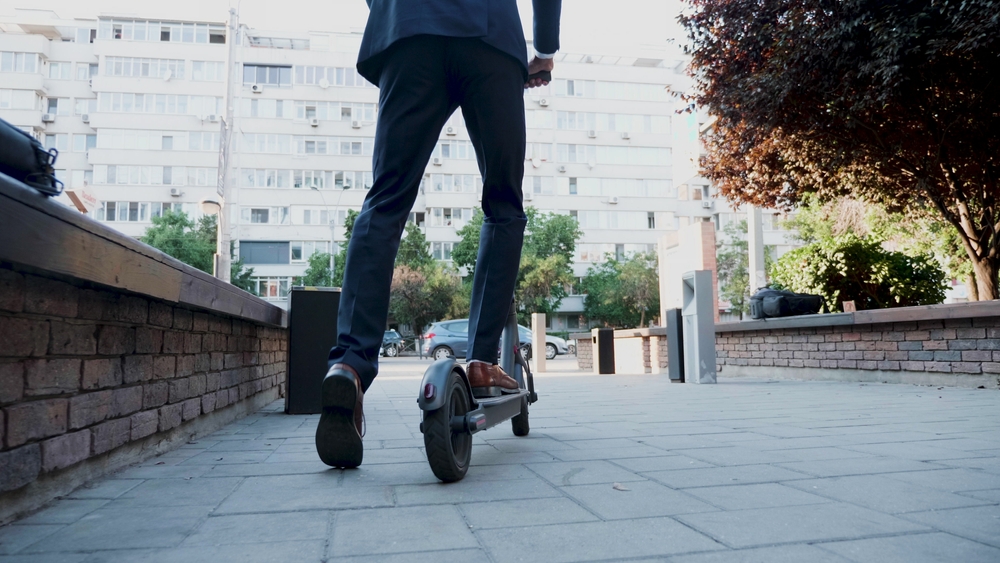
As we move through the beginning of a new year, the laws within the state of New Jersey have already started changing. Recently, we noted that the state updated the laws surrounding e-bikes, particularly who can ride them and what they need in order to do so. These updates have raised additional questions regarding e-scooters (stand-up scooters with an electric hub motor), including whether or not those that ride them are considered pedestrians under New Jersey’s no-fault laws.
In this guide, we will answer the question: Are e-scooter riders considered pedestrians under New Jersey’s no-fault law? And, what are your options for recovering compensation after an injury?
E-Scooter Riders vs. Pedestrians: How New Jersey’s No-Fault Insurance Law Applies
Before we dive into how the no-fault system works in the Garden State, let’s answer the most important question: Are e-scooter riders considered pedestrians under the law? The answer is no.
To understand this, we need to look at David Goyco v. Progressive Insurance Company. In November 2021, David Goyco was struck and injured by a vehicle while riding his low-speed electric scooter (LSES). When he went to file a claim with his insurance carrier, Progressive denied it, claiming that he was not entitled to Personal Injury Protection (PIP) benefits because he was not a pedestrian.
Goyco filed a complaint, arguing that e-scooter riders should be considered pedestrians and therefore entitled to PIP benefits. Despite being hit by a car while unprotected, the New Jersey Supreme Court sided with Progressive, determining that an electric scooter did not meet the definition of a pedestrian under the state’s No-Fault Act. Under this, a pedestrian is defined by whether or not they are operating a motorized device rather than where they are at the time of injury. In the case of Goyco, he was not legally considered a pedestrian because of the e-scooter he was operating.
David Goyco v. Progressive Insurance Company is a notable case, because the outcome begs a very important question: If an injured e-scooter can’t collect PIP benefits, what is their next step to recovering compensation?
Beyond PIP: How to Recover Damages After an E-Scooter Accident in New Jersey
Just because you’re unable to collect PIP benefits doesn’t magically mean the medical bills stop piling up. Like cyclists and pedestrians, e-scooter riders lack the protection afforded to drivers. When an e-scooter rider and a car collide, the impact is often catastrophic, leading to a wide range of severe injuries including broken ribs, pelvis fractures, traumatic brain injuries, internal bleeding, and paralysis.
Without PIP, how are you going to cover the costs of emergency care, doctor visits, surgeries, and ongoing medical treatment? You have a few options:
Using Your Personal Health Insurance
In the immediate aftermath of the accident, one option is to turn to your own personal health insurance, as it can help cover a portion of your emergency care and ongoing medical expenses.
Similar Post: Understanding Your Rights: Navigating Personal Injury Claims After a Severe Accident
Filing a Product Liability Claim
Sometimes, an accident isn’t the result of personal error or another driver’s negligence, but from the company that manufactured the e-scooter. E-scooters face a variety of common defects, including battery failure and collapsing steering columns. If your accident and injury was the result of a product defect, your lawyer can help you file a product liability claim. Unlike personal injury claims, product liability claims only need to prove that the product was defective, not that the manufacturer was negligent.
Pursuing a Personal Injury Claim
This is your primary option for recovering compensation. If the driver who hit you acted negligently (for example they were looking at their phone or speeding) when they hit you, then you are entitled to file a personal injury claim as long as your fault is not deemed greater than the other party. New Jersey uses a modified comparative negligence rule. Under this, you are barred from collecting compensation if you are deemed to be more than 51% or more at fault for the collision. However, your compensation reward will be reduced by your percentage of fault.
In your personal injury claim, you can seek compensation for:
- Medical expenses (including reimbursement of what you paid out of pocket)
- Future treatment and rehabilitation
- Lost wages if you’re unable to work
- Pain and suffering
The personal injury claim process is very different from the benefits offered under PIP. While PIP can cover medical bills regardless of fault (for applicable drivers under NJ law), it cannot account for the pain and suffering that usually results from these types of catastrophic accidents. Simply put, a personal injury claim lets you pursue a wider range of damages.
Similar Post: Choosing the Right Personal Injury Lawyer: 10 Tips to Help Jumpstart Your Search
Don’t Face the Aftermath of an E-Scooter Accident in New Jersey Alone; Call Drazin and Warshaw for a Free Consultation
If you were injured in an e-scooter accident in New Jersey, don’t wait to get the help you need. The attorneys at Drazin and Warshaw have decades of experience pursuing personal injury and product liability claims for those injured throughout the Garden State. Give Drazin and Warshaw a call today at 732-333-8141 or fill out our online contact form to schedule a free consultation. Our firm represents clients throughout the state, including Hazlet, Red Bank, Livingston, and Linden. We’re here to help.
Disclaimer: This blog is intended for informational purposes only and does not establish an attorney-client relationship. It should not be considered as legal advice. For personalized legal assistance, please consult our team directly.